Electrical Inspections · Richmond Hill & Toronto
An infrared scan,
under load.
* Every inspection starts with an infrared thermographic scan of the main panel, breakers and connections while the house is drawing power, so a loose or overloaded connection shows up hot. Then a licensed electrician goes through the rest of the system — the grounding, and the wiring wherever it is safe and accessible — and tells you what is safe, what is not, and what it would take to fix.
You get it in writing, with thermal images, ranked by urgency. Whether you hire us for the repairs is a separate decision.
- Infrared scan, under load
- Written findings, with thermal images
- Priced before we book
- No obligation to repair
LicensedECRA/ESA #7019043
Most of it is invisible until it isn’t.
Cover plates hide the joints. A panel door hides the breakers. A system can sit at its limit for years and give you no sign at all until something draws hard enough to expose it.
Safety, now
Connections running hot
A loose lug or an overloaded breaker heats up before it fails. Under load, the infrared scan shows it as a hot spot; to the eye it looks like every other breaker in the panel.
Federal Pacific and Stab-Lok panels
Inspectors and insurers routinely flag this panel type. If you have one, it sits at the top of the report with any hot connections.
Double-taps, backstabs and DIY splices
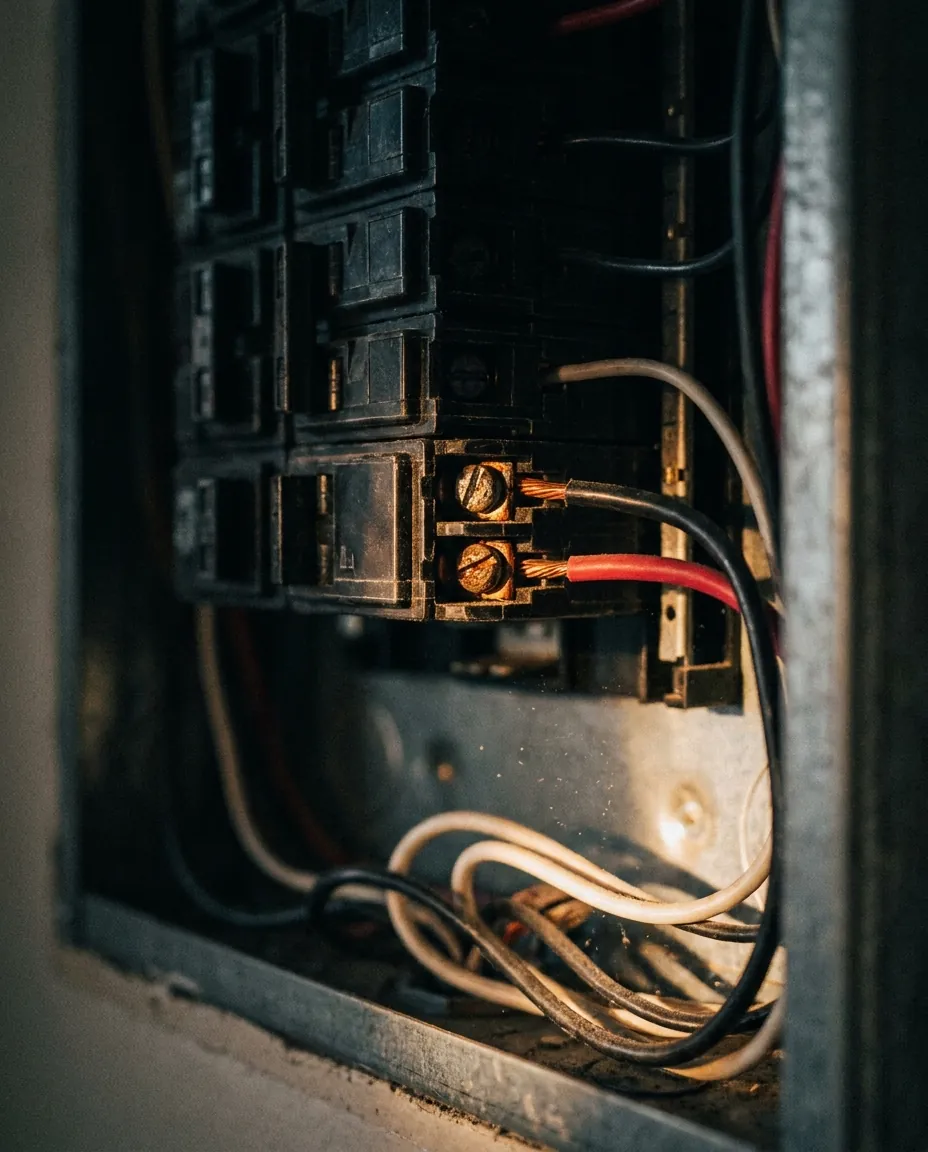
The joints someone made in a hurry — two conductors under one breaker lug, connections buried in a wall with no box. Individually small, collectively the reason a panel runs hot.
Soon
Knob-and-tube and aluminum branch wiring
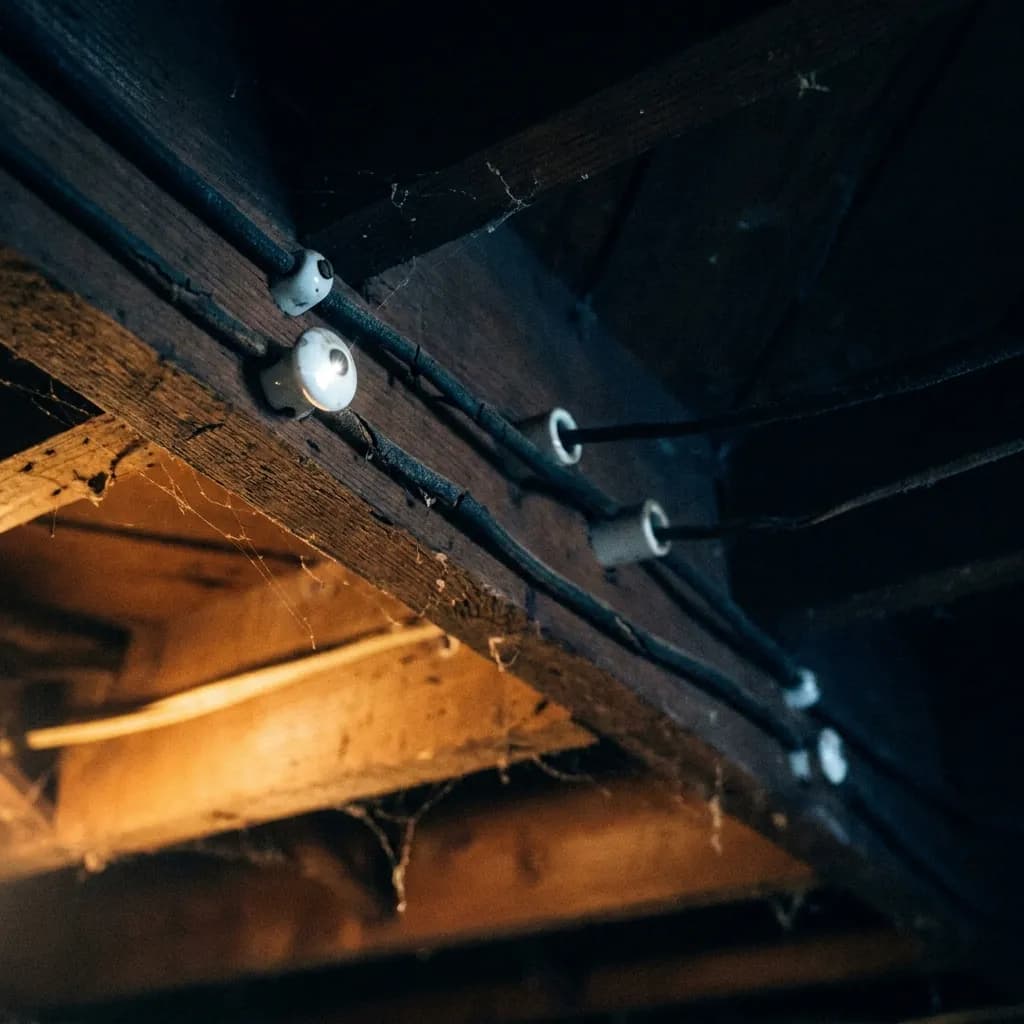
Knob-and-tube is mostly pre-1950; aluminum branch wiring went in from the mid-1960s to the late 1970s. Neither is illegal on its own, but both change what your insurer will write and what the system can safely carry. We identify which you have, where, and how much of it.
Missing GFCI and AFCI protection
Code has expanded where these are required over the years, and older homes were wired to older rules. We map what you have against what the current code asks for.
When convenient
A panel with nothing left to give
Not a fault, but the finding that decides your next five years. If there is no capacity for an EV charger, a heat pump, or a hot tub, better to know before you buy one.
We rank each item by what we find in your house.
- Infrared scan of the main panel, breakers, connections and accessible equipment, under load
- Panel, breakers and buss condition
- Grounding and bonding
- GFCI and AFCI coverage
- Branch wiring type and condition
- Service entrance, mast and meter base
- Smoke and CO alarm coverage
- Written findings, each with its photo and thermal image
- Each item ranked safety-now, soon, or when-convenient
- Fixed-price quotes for anything you want repaired
- Megger testing (insulation resistance)
- Ductor testing (connection resistance)
We add these for a fault or a breaker that keeps tripping, and quote them with the inspection.
Every owner added something. Some of it was permitted work by a licensed electrician. Some of it was a weekend. The report tells you which is which.
Three different things share one name.
The infrared scan is the part only ours includes. Only ESA can issue a Certificate of Inspection: if that is what you have been asked for, this is not it — and we will tell you so on the phone.
Not sure which one you have been asked for? Tell us who asked and what they wrote, and we will tell you honestly.
Ask About an InspectionFrom booking to report.
Book it
Tell us the property and why you are asking. We confirm the scope and the price on the call, and book the scan for peak-load hours (evenings, in a home people live in) so problems show up hot.
We scan, then walk the system
The infrared scan of the panel, breakers and connections comes first, under load. Then the service entrance, grounding and bonding, accessible wiring, receptacles and protection, alarm coverage. We photograph what we find as we go.
You get the report
Written findings, each with its photo and thermal image, ranked safety-now, soon, or when-convenient.
Repairs are your call
Fixed-price quotes for anything you want repaired, which you are free to take elsewhere.
From Google, on another job
5.0 on Google9 reviews(opens Google Maps)“The quoted price was transparent and without any surprises at the end of the job.”
The review in full
I used Copper Bee to install an EV charger in my home, and I was very impressed with the service that they provided.
The team was punctual and efficient. They were able to quickly install the charger with a strong attention to detail and safety. The quoted price was transparent and without any surprises at the end of the job. They handled everything from start to finish including the permit and coordinating ESA certification. I highly recommend them if you're in the market for electrical work.
Four reasons people pick up the phone.
Buying a resale home
The home inspection flagged "electrical — recommend further evaluation by a qualified electrician." This is that evaluation.
Selling, or an insurer asked
An insurer or lender wants to know what wiring is in the property. We identify and document it — see the FAQ on what we can and cannot promise there.
An older home you already own
Nothing is wrong yet. You would rather know what you have while it is a planning problem instead of an emergency.
Before you add a big load
An EV charger, a heat pump, a hot tub. Capacity is the first question and the panel calculator is the fast way to a rough answer.
Adding an EV charger, heat pump or hot tub? The panel calculator gives you a capacity answer in a couple of minutes.
Starts at $299 plus HST. The price depends on the size of the property and how much of the system is accessible, and we confirm it with you before we book — there is no charge for asking.
Ask about an inspectionNo. An ESA inspection is carried out by the Electrical Safety Authority to close a permit on work that was just done, and it ends in a Certificate of Inspection. Ours is a licensed electrician assessing the condition of your existing system and telling you what is wrong with it. We cannot issue an ESA certificate, and neither can any contractor — only ESA can. If the work we find needs a permit, we pull it and ESA inspects that work.
No. A home inspector looks at the whole building — roof, foundation, plumbing, electrical — as a generalist, usually during a purchase. We look only at the electrical system, as licensed electricians, and go deeper: an infrared scan of the panel under load, panel condition, grounding and bonding, branch wiring type, GFCI and AFCI coverage, and capacity for what you plan to add. Plenty of buyers get both, and the home inspection is often what prompts the call.
It finds heat. A loose connection, an overloaded breaker or a failing lug runs hotter than the rest of the panel before it fails; a thermal camera shows the hot spot, and the eye sees a breaker like any other. We scan the main panel, breakers, connections and accessible equipment while the house is drawing power, so we book scans at peak-load hours — evenings, in a home people live in. Each finding in the report comes with its thermal image.
You get the written findings whether or not you hire us, and you are free to take them to another contractor. Findings are prioritised as safety-now, soon, or when-convenient, so you can see which items are urgent and which are not. Anything we quote to repair is quoted separately, with the price agreed before work starts.
We can identify what wiring is actually in the property, document it with photos, and set out what it would take to replace or remediate it. We cannot promise a specific insurer will accept any particular document — that is their decision, and some require their own form. Tell us which insurer is asking and what they have requested, and we will tell you honestly whether we can produce it.
Someone needs to let us in and give us access to the panel, the meter, and the rooms we need to check. It does not have to be you — an agent or a tenant works, as long as they can unlock what we need. We go through the findings with you afterwards either way.
Book the inspection,
get it in writing.
Tell us the property and why you are asking. We confirm the scope and the price before we book the visit.
Book an InspectionCall and speak to an electrician, not a call centre. Nothing is booked and nothing is charged until you have seen the price.
(647) 890-4747- Electrical inspectionA licensed electrician assessing the system you already have and writing up what is unsafe, what is aging, and what it would cost to put right.
- ESA inspectionAn inspection by the Electrical Safety Authority that closes a permit on work just completed, ending in a Certificate of Inspection. Only ESA can issue one.
- Knob-and-tubeWiring used in houses built before roughly the 1950s, with no ground wire and cloth-and-rubber insulation that hardens and crumbles with age.
- Aluminum wiringBranch wiring run in aluminum rather than copper, common in Canadian homes built between the mid-1960s and late 1970s.
- Double-tapTwo wires jammed under a single breaker terminal designed for one. It works until the connection loosens and starts heating.
- Grounding and bondingThe system that gives stray current a safe path back instead of through you: grounding ties the system to the earth, bonding ties metal parts together so they sit at the same voltage.